

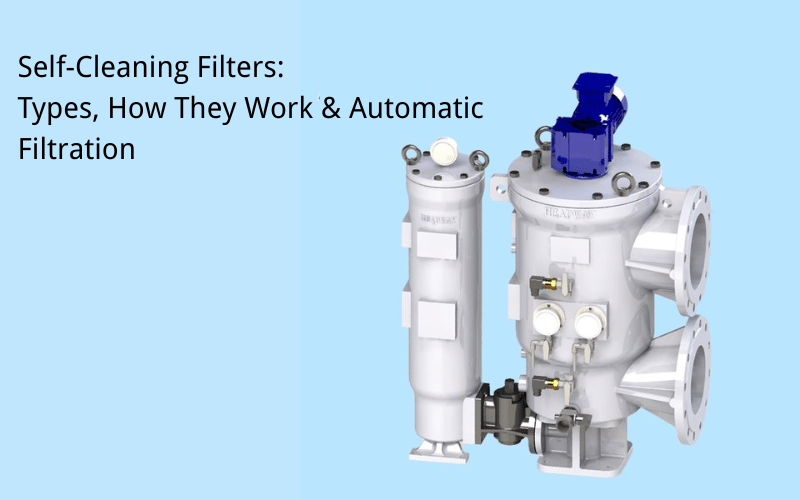
Self-cleaning filters constitute cutting-edge filtration technology that continuously separates contaminants from liquid or gas media, concurrently regenerating its porous medium without interrupting the downstream process. By maintaining constant pressure and volumetric flow rates, these devices minimize hydraulic transients, thus proving essential across a spectrum of both industrial and residential settings. Their automated backwashing or mechanical sweep cycles curtail routine maintenance, compress planned outages, and extend the operational life of sensitive ancillary equipment, such as centrifugal pumps and thermal exchangers, by preventing the accumulation of particulate deposits. Ideal for service in large municipal aqueduct facilities or in compact point-of-use residential plumbing systems, self-cleaning filters deliver a low-lifecycle-cost methodology for ensuring sustained, uncontaminated medium delivery.
Introduction to Self-Cleaning Filters
Self-cleaning filters represent a class of automatic filtration devices designed to eliminate particulates from either liquid or gaseous media while performing in-situ cleaning of the filtration element, thus avoiding any interruption in throughput. Their fundamental design objective is to sustain steady operating conditions by inhibiting the accumulation of debris that, in a conventional filter, would necessitate periodic shutdown for inspection and cleaning. By retaining a fixed differential pressure and flow rate, the filter minimizes transient disturbances in downstream processes.
The continual operation and self-maintenance mechanisms substantially lower labour input and scheduled or unscheduled downtime expenses. In industrial environments, such filters safeguard mission-critical components—such as centrifugal pumps and heat exchangers—against performance degradation and residual contamination that could lead to accelerated wear or failure. In residential constructs, the devices are competent in the context of whole-house potable-water distribution, delivering unobtrusive filtration and obviating the periodic requirement for physical element replacement that is customary in cartridge-based systems.
Types of Self-Cleaning Filters
A concise categorization of self-cleaning filters, highlighting each type along with its operational characteristics, is presented below:
1. Mechanically Cleaned Filters
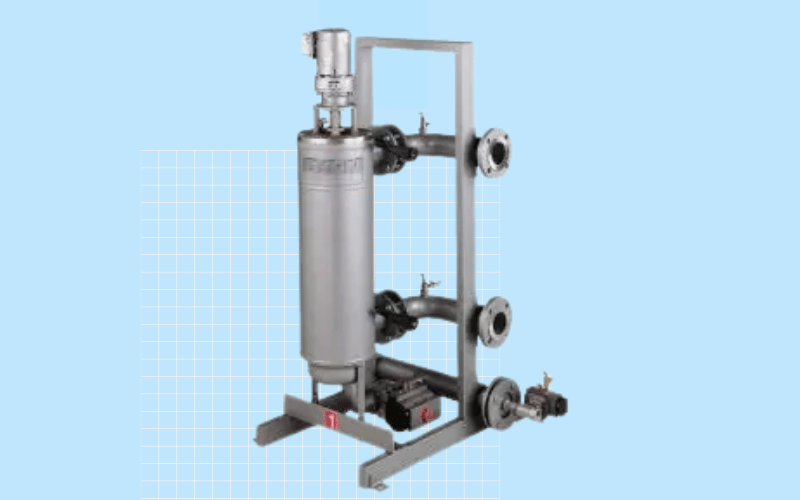
Mechanistic Overview: Mechanically cleaned filters utilize dedicated physical devices—typically counter-rotating brushes, rubber scrapers, or perforated discs—to eject particulate matter bound to the porous filter substrate. These devices, driven by electric or pneumatic actuators, either function continually in an automatic mode or follow a programmed sequence, thereby maintaining a usable filter surface without interrupting the primary flow of the filtered medium.
Areas of Prolific Use: The design range of mechanically cleaned filters makes them indispensable in processes wherein sustained throughput and particle integrity must coexist. Typical environments encompass:
— Industrial Processes: In unit operations ranging from metals fabrication to food processing, the elimination of metallic fines, shot media, or bulk particulate is critical to prevent downstream wear.
— Cooling Systems: Large industrial chillers, condensers, and circulating cooling loops utilize these filters to abate the risk of fouling and pitting corrosion from coarse impurities.
— Water Treatment Plants: These units handle influents with variable loads of crustal or frangible solids, requiring robust technology to safeguard downstream membrane, chemical, or biological processes from bulk fouling.
Intrinsic Strengths: The filtration device offers compelling operational and economic advantages, including:
— Uninterrupted Service: Actuation of the cleaning subsystem occurs in a concurrent or idle mode relative to the filtered medium, resulting in stable flow rates and pressure drops.
— Mechanical Rigidity: The filter frame, substrate, and cleaning appendages are engineered with metallic, polymer, or ceramic composites to withstand abrasion, high temperatures, and corrosive media.
Represented Case History: Rotary brush-augmented cylindrical units appear in the majority of industrial water circuits. These units consist of periodically rotated nylon or stainless brushes that transfer captured solids onto an inclined collection trough, thus maintaining a clean surface while permitting sustained water throughput common in cooling and treatment utility capacities.
2. Backwashing Filters
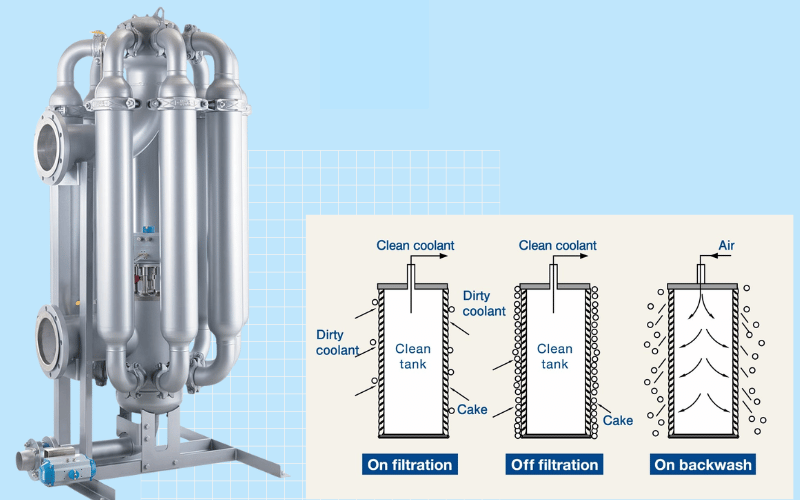
Mechanism of Operation: Backwashing filters function by reversing the influent water flow, thereby dislodging adhered particulate matter within the filter bed and expelling it to waste. This self-cleaning sequence is activated either by monitoring the pressure drop across the medium—an indirect measure of bed fouling—or by adhering to a pre-established time cycle, thereby guaranteeing sustained filter efficacy and limiting the requirement for human intervention.
Key Applications: Backwashing filters exhibit broad adaptability and are routinely integrated into processes demanding the thorough capture of fine solids, such as:
Municipal Water Treatment: Safeguarding the drinking-water supply by continuously removing turbidity and pathogens.
Swimming Pools: Preserving water clarity by eliminating organic and inorganic contaminants.
Industrial Cooling Systems: Countering heat-exchanger fouling by pre-filtering the circulating cooling water.
Notable Advantages:
particle removal performance guarantees the avoidance of downstream malfunctions. Dislodged solids are concurrently expelled, circumventing risk of secondary contamination.
Automated operation not only mitigates labor costs but optimizes cleaning intervals, thus minimizing hydraulic waste.
Practical Example:
Municipal drinking-water facilities and stadium-scale aquatic centres commonly deploy large-diameter sand and screen filters fitted with electronically controlled backwashing.
3. Suction-Scanning Filters
Operating Principle:
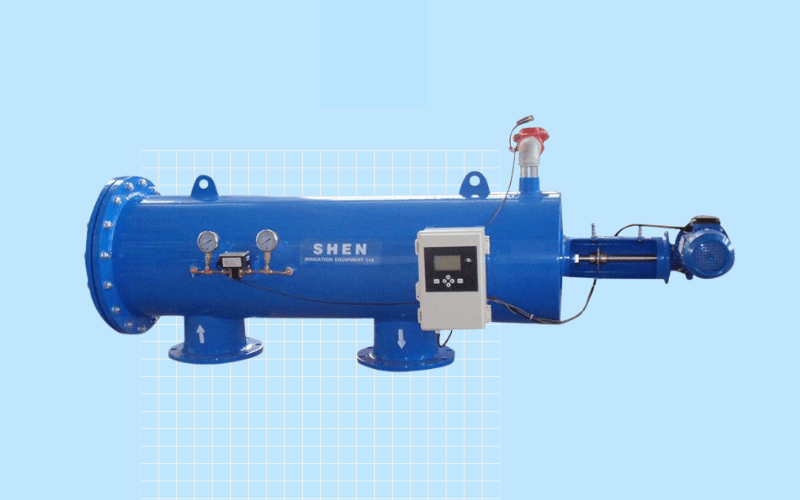
Operating Principle Suction-scanning filters consist of meticulously aligned suction nozzles that traverse the filtration surface in rows. Each nozzle generates a focused vacuum force that dislodges both organic and inorganic fouling from the filter medium. The cleaning sequence is executed in a continuous, non-intrusive manner, thereby preserving the primary fluid velocity and residence time, and allowing uninterrupted filtration at maximum design capacity.
Key Applications
The technology has achieved wide acceptance in managed-water networks and mission-critical applications, including: Agricultural Pressurized Mains: Sustaining irrigation frameworks by preventing hydraulic contamination. Hybrid Evaporative-Absorption Towers: Maximizing cooling performance and enabling closed-loop water recovery. Reverse Osmosis and Micro-Plate Clarification Systems: Augmenting performance metrics in both primary and secondary water treatment stages.
Notable Advantages
Incremental cleaning is accomplished via overlapping sweeps, thus minimizing both hydraulic and energy overhead. The design materially decreases maintenance requirements by obviating manual intervention and system outages, thereby consolidating operational reliability. Resource efficiency is achieved through calculated reductions in chemical, hydraulic, and energy expenditures without compromising the intended filtration efficacy.
Practical Example
An advanced automatic bar screen embedded with adaptive suction nozzles and active anti-blocking features epitomizes the technology. Systems of this type self-calibrate to variable flow regimes, and the integrated anti-blocking elements curtail particle accumulation, securing dependable filtration performance even in ultrahigh-loading scenarios.
4. Hydraulic Cleaning Filters
Mechanism of Operation:
Hydraulic cleaning filters utilize line pressure to purge the filter medium, eliminating the need for system shutdown. A differential pressure sensor monitors flow; when debris raises the differential beyond a preset threshold, the control mechanism initiates a cleaning cycle. Fluid diverts momentarily, producing a reverse flow that dislodges the accumulated particles. The particles are then carried to a dedicated flush outlet, maintaining unbroken system performance without operator attendance or auxiliary controls.
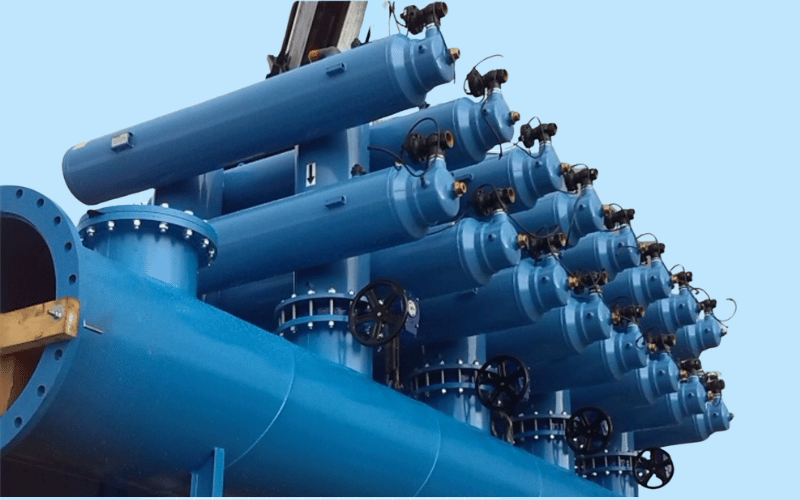
Key Applications:
These self-cleaning units are incorporated wherever constant reliability and reduced maintenance requirements are paramount. Typical deploy-ment scenarios include:
-
Irrigation Systems: Preventing emitter clogging and preserving hydraulic efficiency in surface and subsurface water distributions.
-
Agricultural Operations: Facilitating steady and uniform supply for crops by mitigating bio-fouling and particulate deposition.
-
Industrial Processes: Suited for closed-loop machinery where unplanned downtime and technician service are to be avoided.
Notable Advantages:
-
Efficient Design: The self-cleaning feature is realized without moving parts, keeping maintenance requirements to a minimum and simplifying installation.
-
Energy Independence: Since the cleaning cycle is driven entirely by system fluid pressure, external electrical or pneumatic power inputs are obviated, lowering operational costs and promoting system modularity.
Practical Example:
Hydraulic disc filters, characterized by stacked, conical filter discs that can be cleaned while maintaining flow, compactly fulfill these attributes. They are routinely found in field-scale subsurface irrigation, where steady hydraulic performance is crucial for uniform crop hydration.
5. Ultrasonic Self-Cleaning Filters
Mechanism of Operation:
Ultrasonic self-cleaning filters utilize high-frequency ultrasonic waves to transmit vibration across the entire filter membrane. The inherent oscillatory motion dislodges particles and surface contaminants while steering clear of direct mechanical impact. The loosened contaminants are subsequently mobilized out of the system via the process’ inert fluid sheath, keeping the filtration path clear and obviating the need for operator-based cleaning cycles.
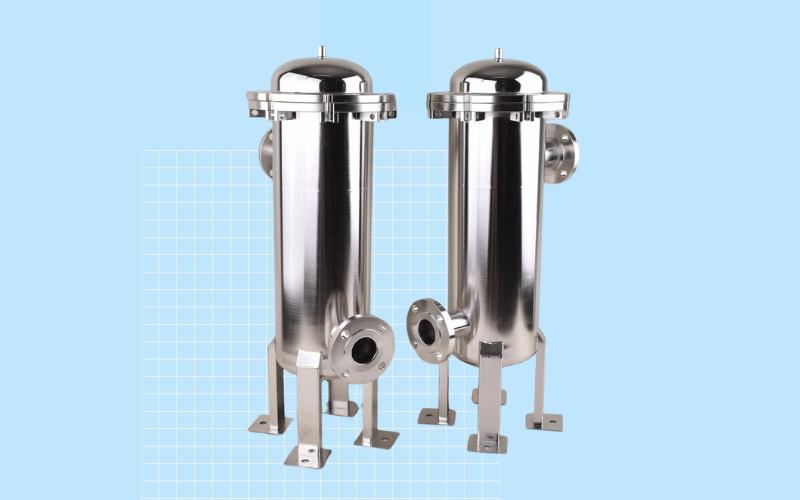
Key Applications:
These devices are optimally deployed in settings demanding rigorously clean process streams, including:
Pharmaceutical Manufacturing: Delivering secure, sterility-compliant filtration within critical drug-formation workflows.
Electronics Industry: Preserving ultraclean fabrication conditions for sensitive microelectronic components through contaminant-free preconditioning.
Laboratory Settings: Securing uninterrupted, high-fidelity filtration for precision experiments and advanced research initiatives.
Notable Advantages:
Non-Invasive Cleaning: Ultrasonic action eliminates the abrasive contact, curtailing mechanical degradation and safeguarding long-term filter performance.
Gentle on Delicate Systems: The method’s low-stress regime makes it ideally suited for substrates and devices where mechanical scrubbing could compromise the material.
Practical Example:
Integrated with microfiltration and nanofiltration architectures, ultrasonic cleaning modules sustain the stringent cleanliness levels needed to support high-precision production and research targets throughout continuous duty cycles.
Working Mechanisms of Different Self-Cleaning Filters
Mechanically Driven Filters:
This technology employs rotary or linear-drive brushes, pneumatic nozzles, and motorized rakes to dislodge solids from the screen or cartridge surface. As axial or tangential forces sweep the filtration surface, sizable particles—and often fragile sludges—are ejected into a dedicated collection trough. The rugged construction, often stainless or carbon steel, permits long service under high-solids, viscous service streams typical of cooling water, industrial wastewater, and tailings pumps in mining operations.
Hydraulic Self-Cleaning Filters:
Reverse-flow or hydro-backflush filters clean via a momentary re-routing of the process stream. Upon reaching a predetermined fouling threshold, a motorized valve diverts a segment of clean or slightly over-pressure water directly through the filtration element in the reverse direction. A quick, low-pressure surge detaches accumulated particulates, which exit through a purge port. These hydraulic actuator filters, fielded broadly in municipal water, reuse, and agricultural delivery, offer high reliability and low energy consumption through effective back-pressure management.
Automatic Electric Filters:
Sophisticated automatic filters combine low-current electric actuators, differential pressure transducers, and programmable logic control to sequence clean cycles. The differential-pressure sensor yields a real-time signal to the PLC, which aggregates flow, time, and turbidity data to decide the optimal cleaning moment. Once the set threshold is tripped, the PLC governs valve sequencing and actuator engagement, executing backflush or auxiliary sequence with precision. These electric self-cleaning systems are predominant in critical-unit operations across pharmaceuticals, food and beverage, and specialty chemicals, where process integrity and contamination-free streams are mandated.
Ultrasonic Self-Cleaning Filters leverage precisely-tuned, high-frequency ultrasonic transducers to sustain focused acoustic waves within the filter chamber. The resultant cavitation process produces transient microbubbles whose rapid collapse occurs at the filter mesh interface, liberating impurities measured in nanometers while preserving structural integrity. By eliminating the risk of mechanical abrasion or excessive hydraulic pressure, the technology is ideally suited to defend fragile membrane substrates and to accommodate the stringent cleanliness specifications required in semiconductor photolithography, analytical laboratory workflows, and high-specification chemical synthesis.
Advantages of Self-Cleaning Filters
Self-cleaning filters offer a compelling reduction in scheduled maintenance labour and equipment idle time. Unlike conventional designs requiring manual shutdown for element cleaning or replacement, these engineered systems execute automated purge sequences. By allowing continuous operation, the filters remove the need for repeated maintenance windows, thereby stabilising fluid delivery and guarding against process disruptions that might be costly in a high-throughput industrial context.
In addition, continuous parallax cleaning optimises overall system performance and realises durable economic advantages. By keeping the filtering medium in a consistently unimpeded state, the devices inhibit pressure losses that would otherwise elevate energy inputs and transmit fatigue forces to pumps and downstream hardware. Although the entry-capture capital outlay is elevated compared to sacrificial burr filters, the cumulative downtimes, manual labour, replacement components, and unplanned outage penalties that the self-cleaning configuration obviates justify the acquisition in a comparatively brief election horizon.
Applications of Self-Cleaning Filters
Self-cleaning filters occupy a central position in both manufacturing processes and comprehensive water treatment schemes. Within turbines and chemical processing plants, they safeguard critical components—such as heat exchangers, mist eliminators, and cooling coils—by perpetually capturing particulate and biological impurities from process cooling water, reactive chemicals, and fuel streams. Municipal and industrial treatment facilities, likewise, deploy these devices to expedite pre-filtration of raw intake water, polish wastewater effluent, and protect irrigation manifolds from particulate and biological fouling.
The application remit of self-cleaning filtration has continued to broaden. In large-scale HVAC distinguished by extensive ducting and variable airflow, these devices preserve heat transfer efficiency and maintain acceptable indoor particulate loads, all while obviating protracted maintenance shutdowns. The filters further demonstrate broad versatility within the food and beverage sector—safeguarding membrane filtration, in marine propulsion systems—prolonging diesel injector and intercooler reliability—and in the oilfield environment, where watering stream filtration at well pads prevents diminished flow rates and riser corrosion. In every context, the dominant design feature of automatic self-cleaning mechanisms remains the sustained reliability and low operator burden of uninterrupted, high-efficacy filtration.
Frequently Asked Questions
Q: What is a self-cleaning filter?
A: A self-cleaning filter is a filtration system that automatically removes debris and contaminants from the filter element without requiring manual cleaning. It is especially useful in applications like water treatment and irrigation systems, where maintaining water quality is essential.
Q: How do different types of self-cleaning filters work?
A: Different self-cleaning filters use various mechanisms to clean the filter media. Backwash filters reverse the flow to dislodge debris, while mechanically cleaned filters use scrapers or brushes to remove contaminants. These methods ensure consistent flow rates and clean water output.
Q: What are the advantages of self-cleaning filters?
A: Self-cleaning filters reduce maintenance costs by minimizing the need for frequent filter replacements and manual cleaning. They also improve water system efficiency by maintaining steady flow rates and optimal water quality, making them ideal for industrial and domestic applications.
Q: How does the automatic self-cleaning process function?
A: The automatic self-cleaning process uses a programmed schedule or sensor-triggered operation to start the cleaning cycle. During this cycle, water flow reverses or mechanical scrapers activate to remove debris, keeping the filter effective without constant supervision.
Q: What types of water filters can be self-cleaning?
A: Self-cleaning filters include sand filters, disc filters, and tubular backwash filters. Each type uses a unique cleaning mechanism, offering flexibility to suit specific water sources and quality requirements.
Q: How does a self-cleaning water filter improve water quality?
A: A self-cleaning water filter continuously removes contaminants and prevents buildup on the filter media. This ensures a consistent flow of clean water, reduces clogs, and maintains high water treatment standards.
Q: What components are involved in an automatic self-cleaning filtration system?
A: An automatic self-cleaning filtration system includes a filter element, a cleaning mechanism (like backwashing or scrapers), and control systems to automate the cleaning process. These components work together to ensure efficient filtration and uninterrupted water flow.
Q: Can self-cleaning filters be used in industrial applications?
A: Yes, self-cleaning filters are widely used in industrial applications. They handle large water volumes, maintain high water quality, and manage significant debris loads, making them essential for manufacturing and processing operations.
Q: How do I choose the right self-cleaning filter for my needs?
A: To choose the right self-cleaning filter, consider factors like your water source, desired flow rate, and specific cleaning requirements. Evaluate different filter types and cleaning mechanisms to find the best fit for your water treatment needs.
Concluding Summary:
Self-cleaning filters represent a transformative advance in filtration technology by automating the cleaning cycle and ensuring continuous performance without operator intervention. Their varied architectures—backwash, scraper, ultrasonic, and automatic electric—are engineered to meet the stringent requirements of applications spanning industrial cooling, municipal water treatment, and precision manufacturing. By minimizing manual maintenance, shielding downstream equipment from fouling, and maximizing hydraulic and thermal efficiency, these filters confer significant lifetime cost savings and elevate operational uptime. Their adaptable performance and proven effectiveness position them as a vital subsystem in sectors where uninterrupted filtration is a fundamental operational constraint.

